
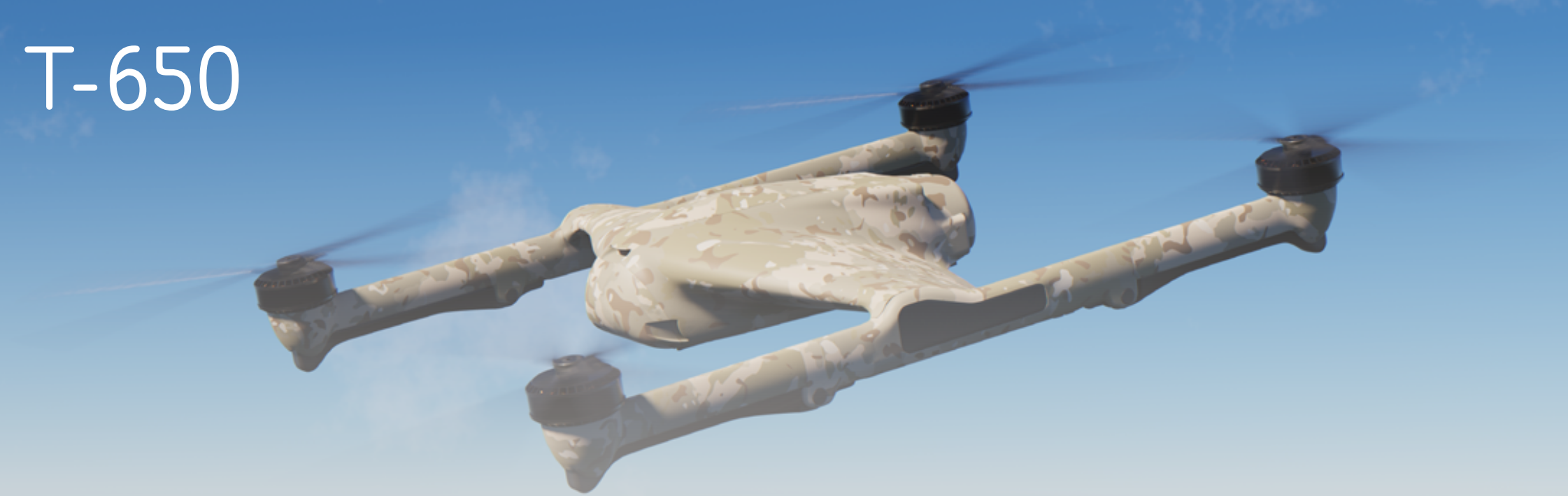

T-650
Product descripton: T-650 by Malloy Aeronautics
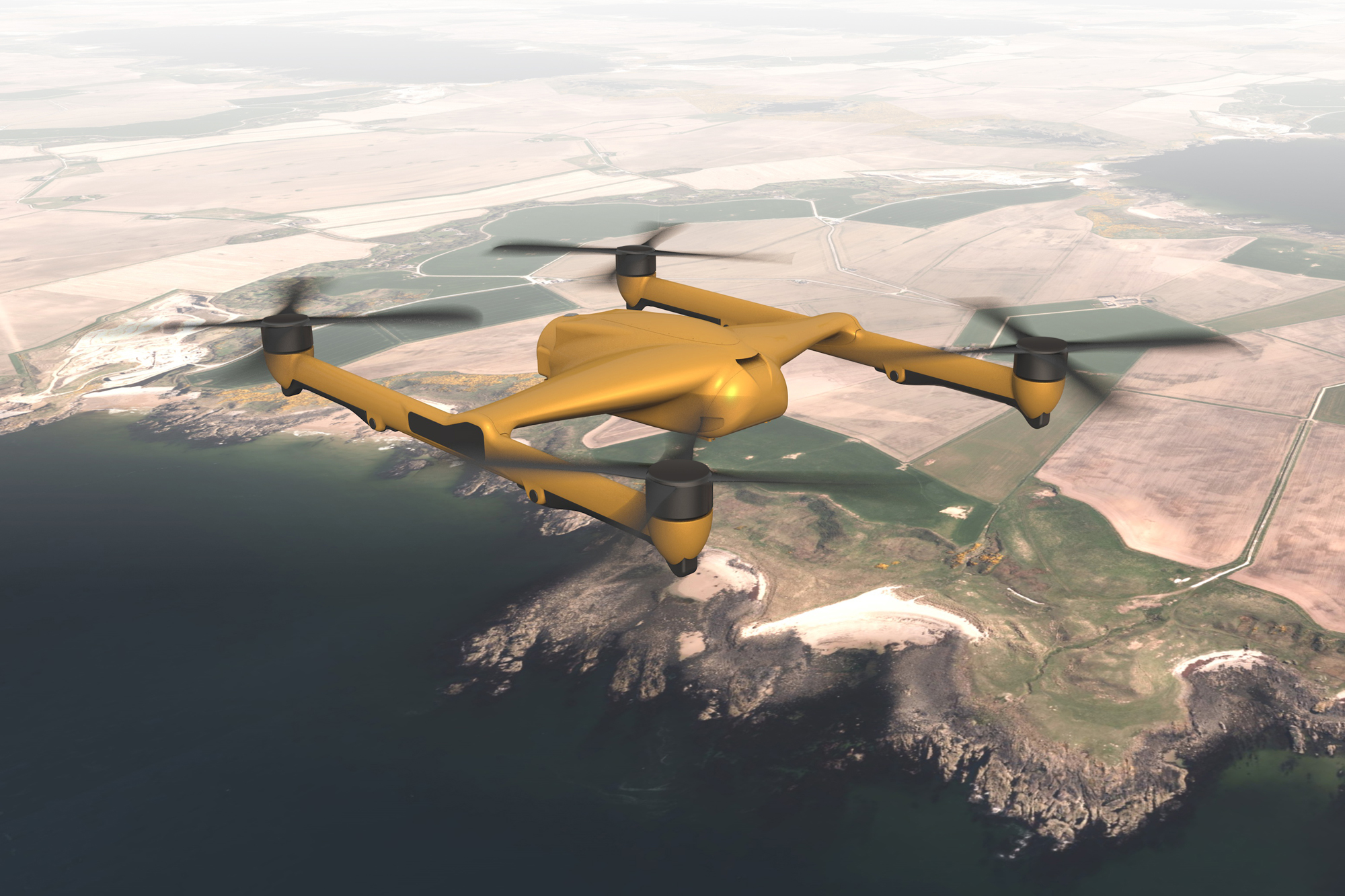
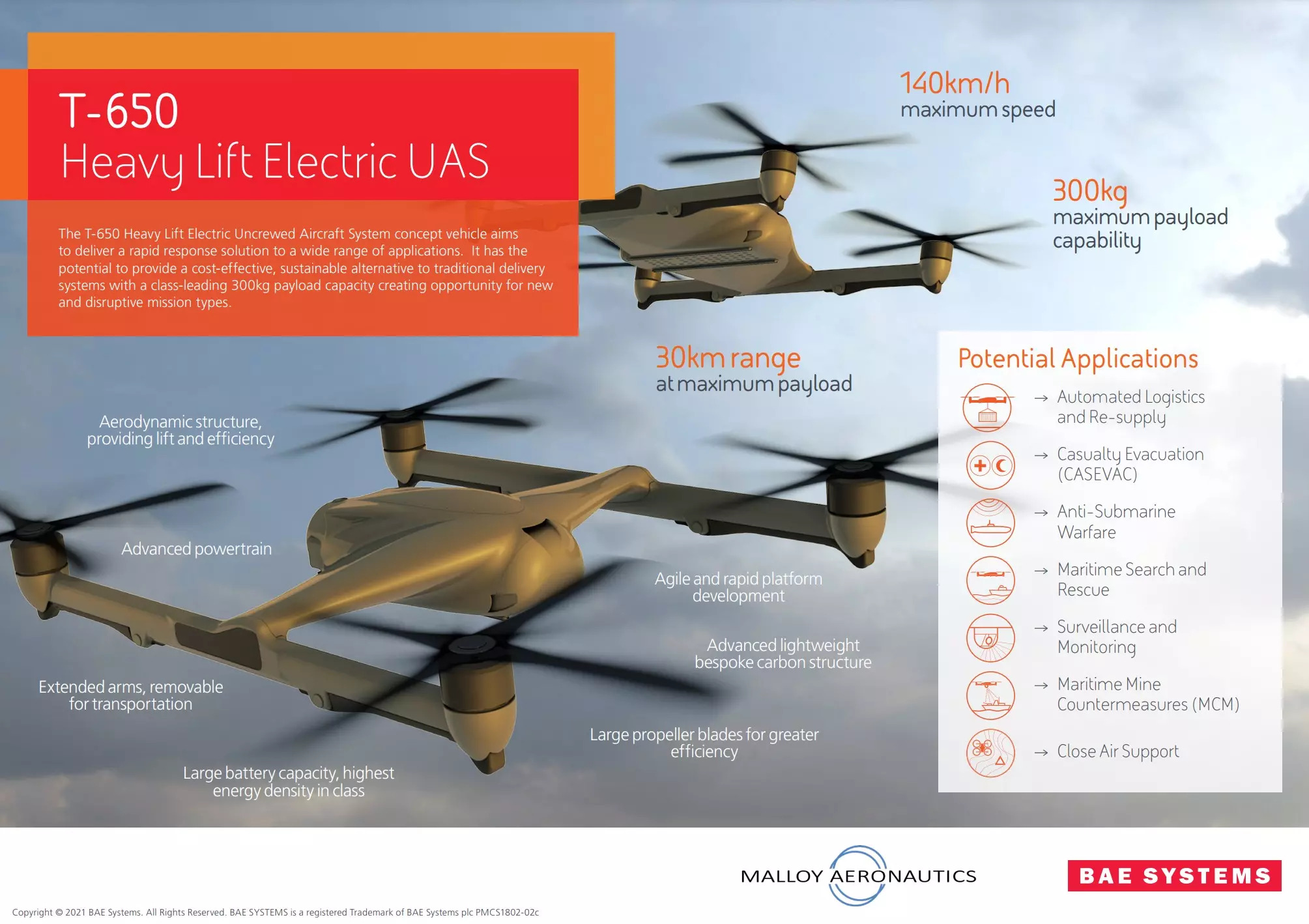
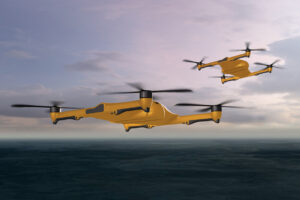
As the world’s heaviest-lifting all-electric VTOL UAS, the T-650 will deliver a class-leading 300 kg payload capacity and benefits from a number of advantages resulting from its VTOL configuration. It is runway-independent with beyond visual line of sight (BVLOS) capability, enabling it to operate from hard-to-reach locations that are inaccessible to most alternative forms of aircraft or ground vehicles.
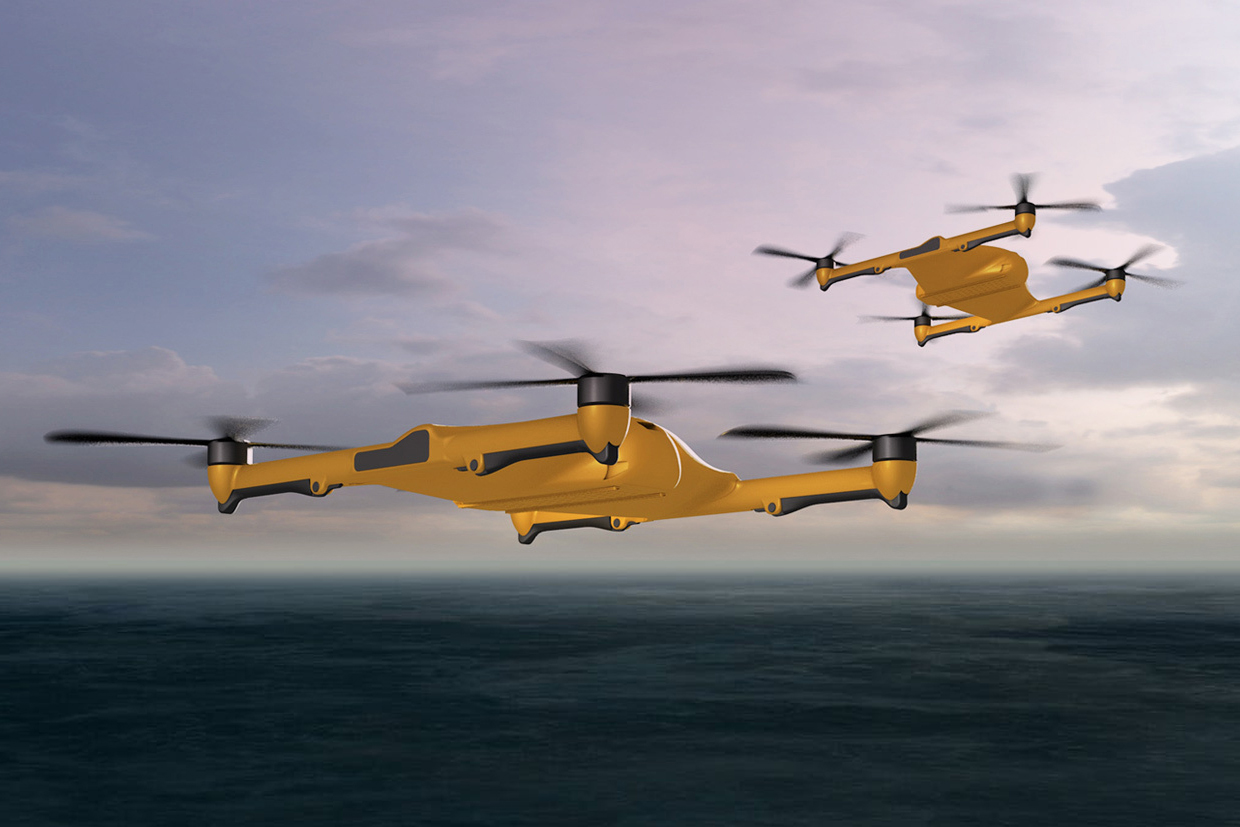
It is specifically designed with a diverse range of applications in mind, including ship-to-ship and ship-to-land movements, making it a leading candidate for both land- and sea-based logistics operations. A simple design with only limited moving parts provides value to customers through significantly reduced maintenance and operating costs compared to traditional rotary wing aircraft.
The T-650 will be developed to operate either as a stand-alone asset or as part of multi-domain systems integrated with other assets across the fleet, offering further opportunities to streamline operations.
Benefits
- Integrable with third party systems
- Secure interoperability
- Multi-role reconfigurable platform
- Class leading payload capacity
- Low operating & maintenance costs
- All-electric: Zero emissions at point of use
- Commonality across the fleet
- Low turnaround time
- Runway independent operation
- Limited training required
Core Features
• Vertical take-off and landing (VTOL)
• Multi-role capability
• Removable hot-swappable rechargeable batteries
• Remote payload release capability
• Open architecture system
• Weatherproof design
• Customised transportation media
• ITAR free design
• Blood and medical goods transportation capability
• 1-2 person operation dependent on mission
Options
• Precision autonomous landing
• Anti-GPS jamming capability
• On-board mission computer
• Bespoke advanced mission planning system
• Configuration for sea operations
• Customised payload integration
• Integration with other military systems
Use Cases
One drone, many uses.
Logistics
The T-Series is capable of conducting a range of logistics and re-supply missions across multiple domains in daytime or nighttime conditions. It provides operators with a reduction in the cost per flying hour and servicing over traditional crewed rotary wing craft. Furthermore, the ability for uncrewed operation in both land and maritime domains reduces the dangers of flying crewed aircraft in contested airspace or in hazardous environments such as high sea states or mountainous regions.
Due to the lower cost compared to larger rotary wing craft, the T-Series can be equipped to smaller military formations, facilitating greater mission flexibility. Its simple design, with only limited moving parts, also reduces maintenance requirements, lowering the personnel footprint on operations.
With autonomous capabilities, the T-Series can support automated logistics and re-supply missions with minimum personnel and maximum capacity. The T-Series is designed to be easily reconfigured with different payloads, enabling it to be readily adapted to support different mission types.
CASEVAC
Development of a CASEVAC system will enable the short-range transfer of a casualty out of immediate danger and to the next line of care. The CASEVAC capability allows for casualties in immediate danger to be extracted without risking crewed aircraft in hazardous environments.
The smaller footprint of the T-650 enables it to manoeuvre closer to the casualty and requires a significantly smaller landing area. Utilising a UAS for CASEVAC reduces the burden on other expensive crewed assets, releasing them for other critical missions and lowering operational costs. The characteristics of the T-650 CASEVAC system allow for low-profile extraction to prevent signposting the mission to adversaries.
Anti-Submarine Warfare
Capability is being developed to enable the T-650 to deploy a lightweight torpedo, adding offensive anti-submarine warfare (ASW) capabilities to ships that do not have an organic ASW system or are too small to accommodate a helicopter.
Compared to traditional helicopter-based torpedo deployment, the T-650 would provide faster mobilisation times with significantly lower operating costs and would release helicopters for other tasks. The T-650 also offers the potential for teaming with other crewed or uncrewed platforms. With additional platforms available, the weapon train may be extended, keeping the threat engaged for longer, or multiple torpedoes may be deployed.
A T-650 can also provide greater torpedo range than traditional tube-launched systems on warships.
Find to Strike
Development of capability to carry and launch air-to-surface missiles, including guided anti-armour missiles, will give the T-Series the ability to deliver an end-to-end “find to strike” capability.
Working either independently or collaboratively with an autonomous laser target designation system offers the potential to change the way joint fire operations are currently carried out. This system is a direct response to a clear and urgent need, confirmed by end users close to operational challenges and current capability shortfalls.
Where close air support is unavailable, target designation and release of precision laser-guided munitions at a range beyond that of small arms fire is currently not feasible. In such circumstances, a T-Series UAS could provide the ability to rapidly deploy precision strikes in support of ground forces under attack.
By removing the need for crewed air assets, the risk to aircrew and the time from target identification to strike are dramatically reduced. This greatly enhances the survivability of ground forces by shortening response time and increasing the probability of a successful first-round strike and disruption of enemy forces.
Technical specifications
| Specification | Value |
| Aircraft type | eVTOL heavy-lift air cargo drone |
| Piloting | Autonomous |
| Use type | Cargo only |
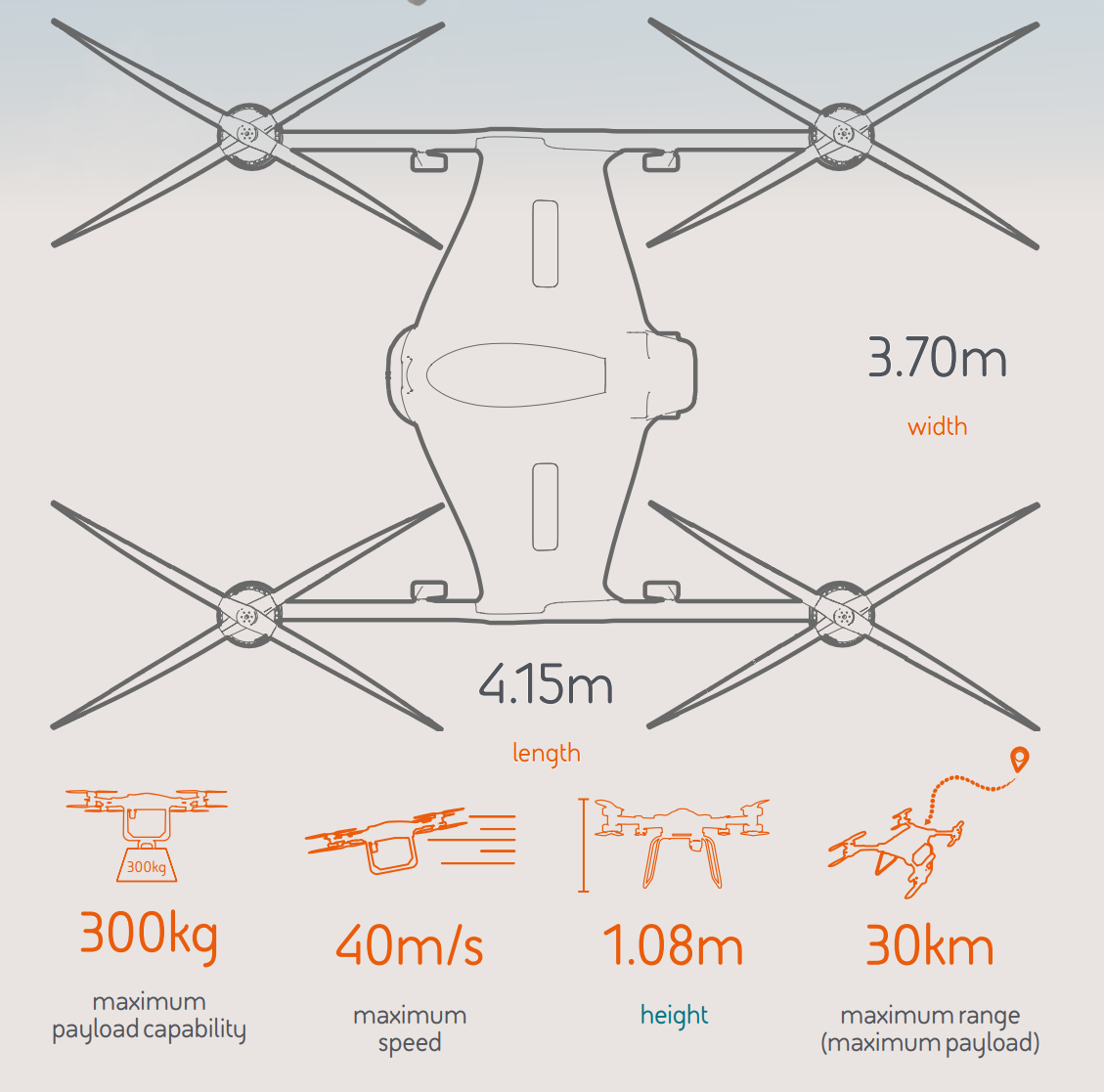
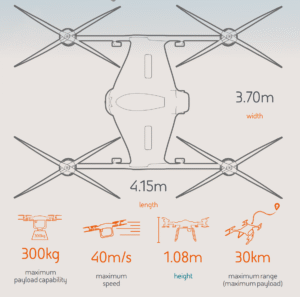
| Maximum payload capacity | 300 kg (660 lb) |
| Maximum speed | 40 m/s (≈144 km/h or 87 mph) |
| Maximum range (no payload) | 80 km (50 miles) |
| Maximum range (with max payload) | 30 km (19 miles) |
| Dimensions (L × W × H) | 4.15 m × 3.70 m × 1.08 m |
| Propulsion | 8 electric motors with 8 propellers (stacked on angled arms) |
| Power source | Removable high-density batteries for fast turnaround |
| Landing gear | Belly landing (on fuselage bottom) |
| Safety features | Distributed Electric Propulsion (DEP); redundant avionics, drives, and battery system |
| Weather capability | All-weather operation |
| Transportability | Removable arms and batteries for compact ground/air transport |