
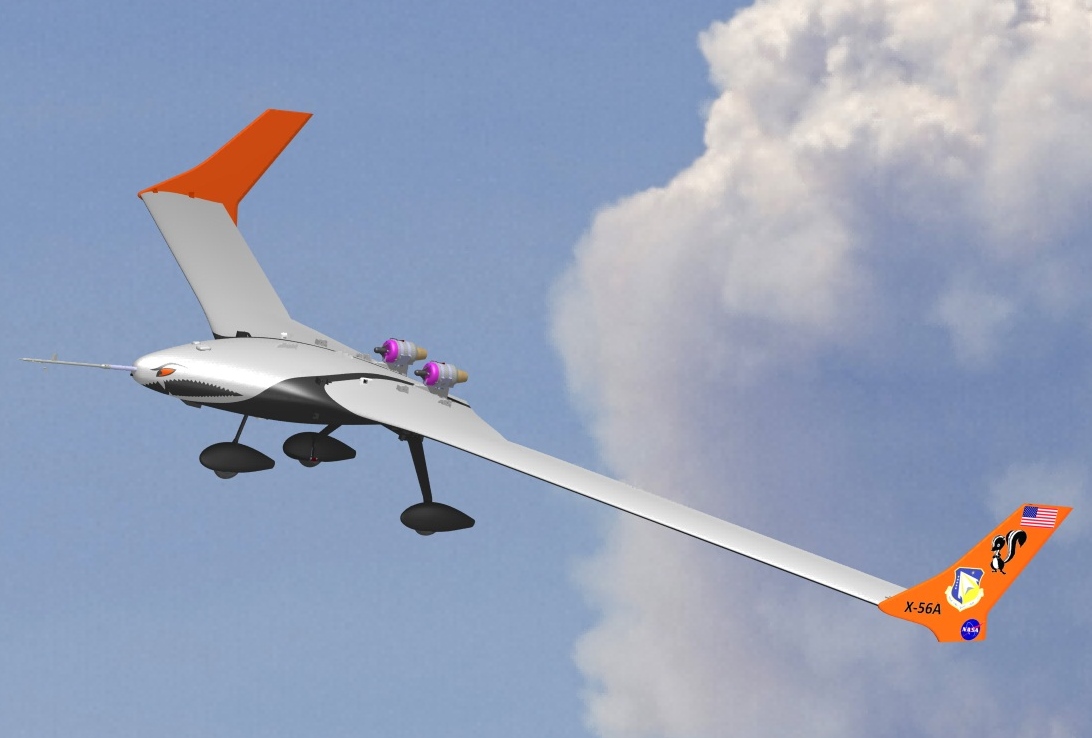
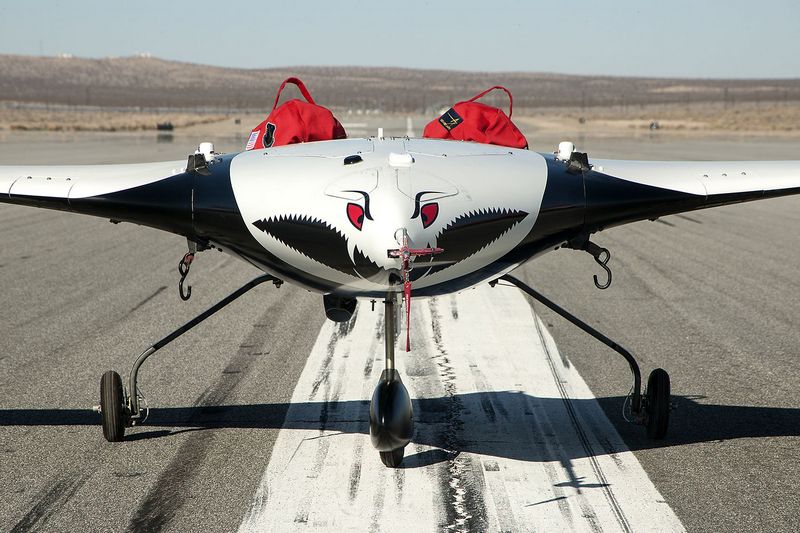
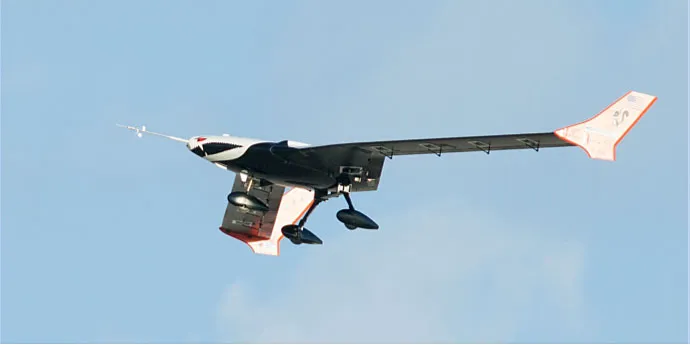
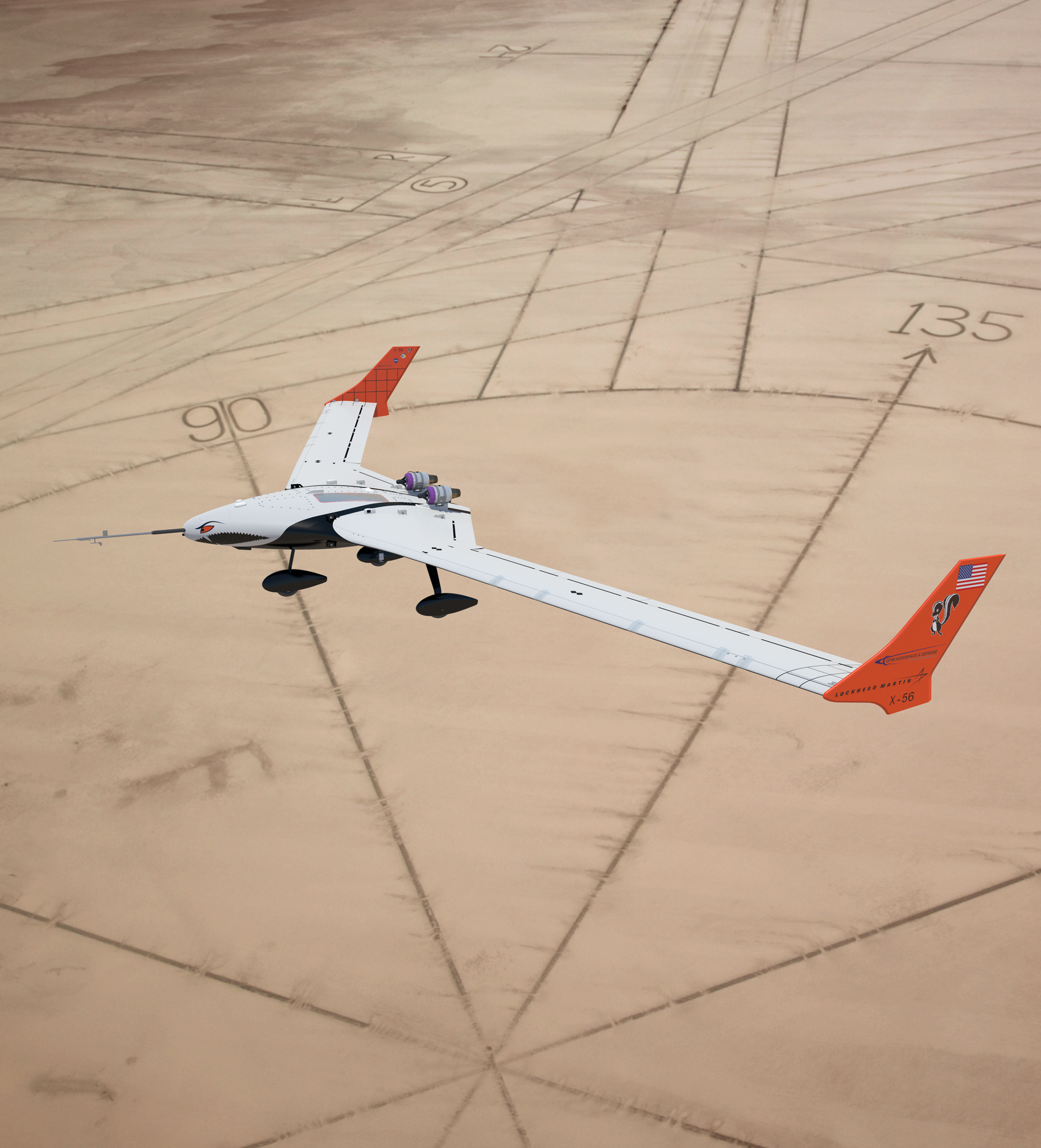

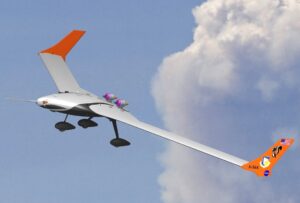
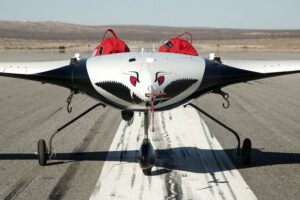
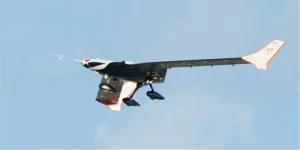
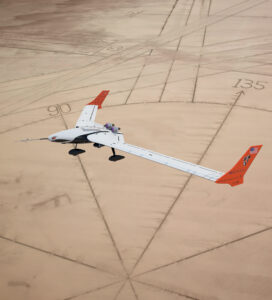


X-56A
Product descripton: X-56A by Lockheed Martin
The X‑56A is a modular research unmanned aerial vehicle developed by Lockheed Martin’s Skunk Works in collaboration with the U.S. Air Force Research Laboratory and NASA. It is designed to investigate high-altitude, long-endurance flight by testing advanced aeroelastic control technologies such as active flutter suppression and gust-load alleviation using interchangeable stiff and highly flexible wings. The platform enables evaluation of lightweight, high-aspect-ratio wing configurations that would typically be prone to flutter. Testing included both stiff and flexible wing sets to validate digital flight control suppression across various instability modes.
Technical specifications
| Category | Specification |
| Length | 2.3 m (7.5 ft) |
| Wingspan | 8.4 m (27.5–28 ft) |
| Weight (Empty) | Approx. 220 kg (480 lb) |
| Powerplant | 2 × JetCat P400 turbojets (~89 lbf thrust each) |
| Maximum Speed | ~222 km/h (138 mph / 120 knots) |
| Flutter Test Speed | ~200 km/h (110 knots) |
| Wing Configurations | Stiff wings + flexible wings (four pairs built for testing) |
| Flight Control System | Digital active flutter suppression (including body‑freedom flutter) |
| Recovery System | Ballistic parachute for safe recovery after wing failure |
Ratings and reviews
0
from 5
0 reviews