

DEMON UAV
Product descripton: DEMON UAV by BAE Systems
Flying Without Flaps
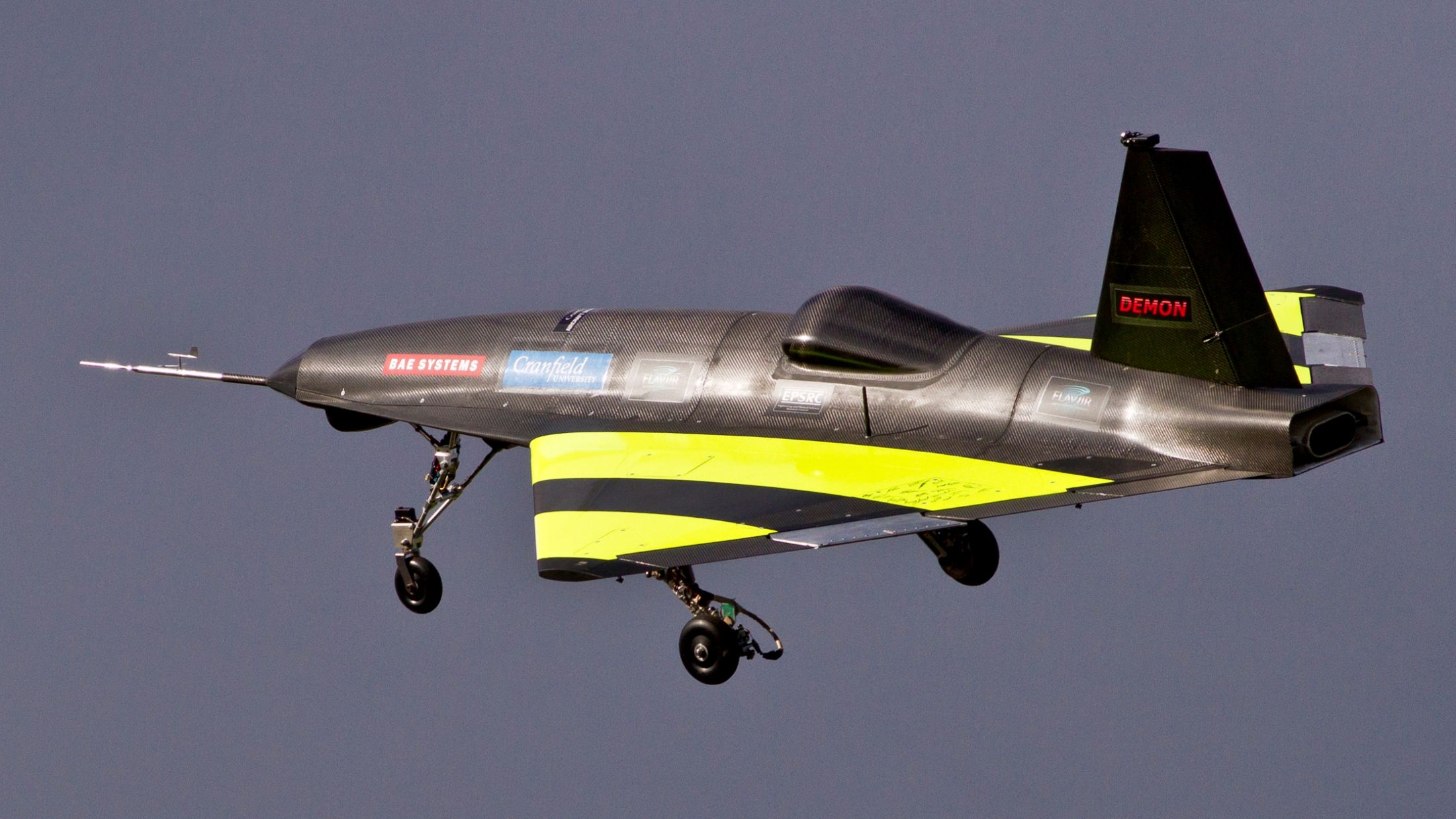
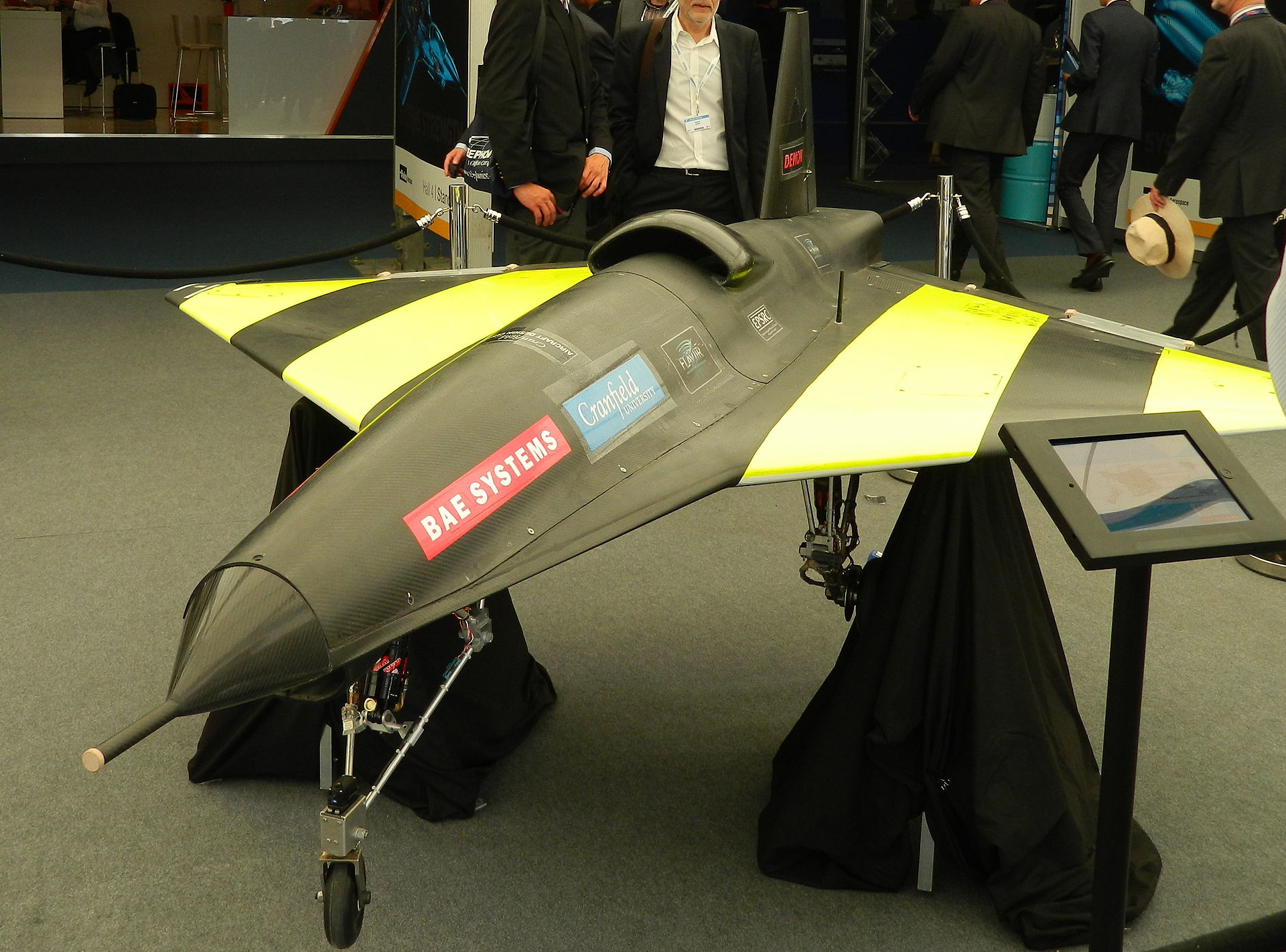
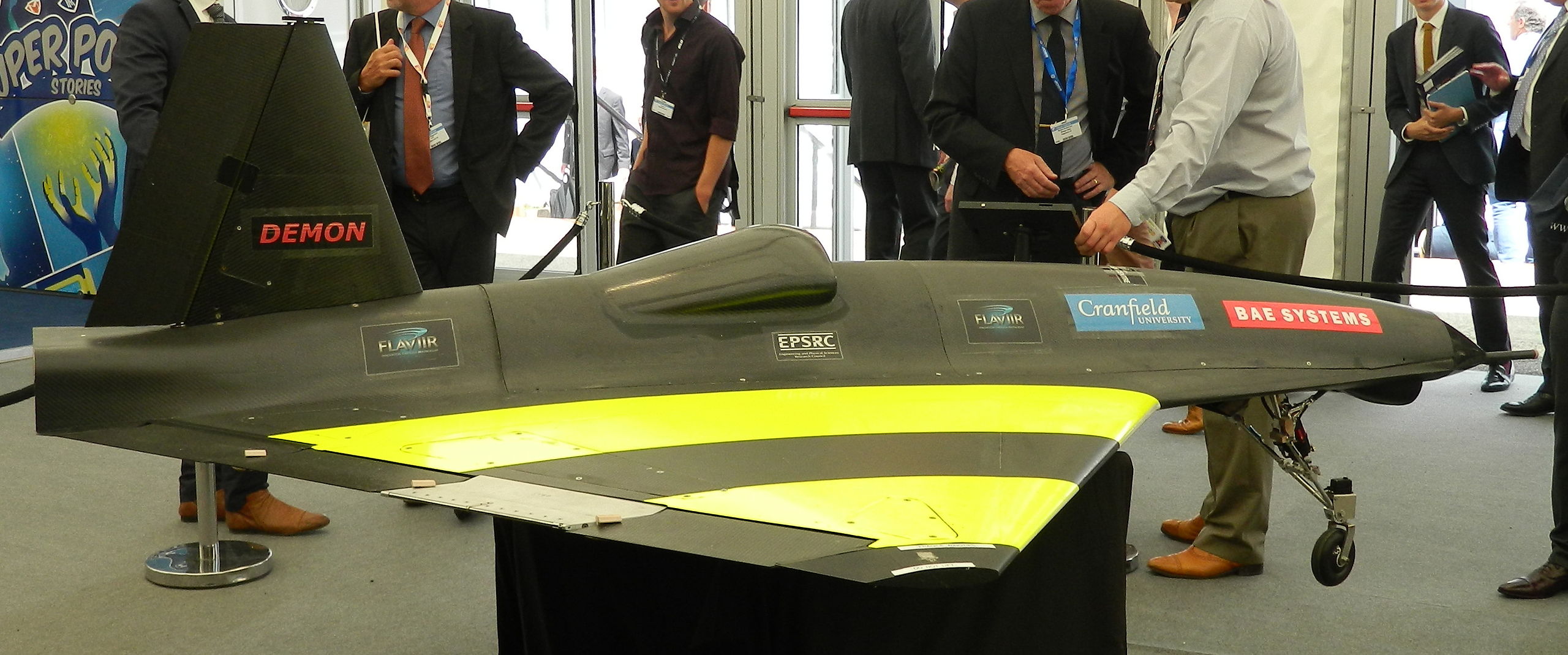
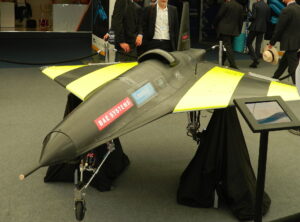
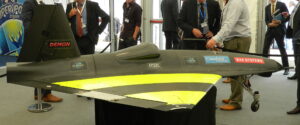
DEMON is an unmanned aircraft vehicle (UAV) designed to fly without using conventional ‘flaps’ (elevators or ailerons), using jet propelled blasts of air blown over the trailing edges of its wings to manoeuvre.
The demonstrator aircraft, which weighs approx. 90kgs and has a wingspan of 2.5m, undertook the first ‘flapless’ flight ever to be allowed by the UK Civil Aviation Authority on 17 September 2010.
Because it is designed to fly with no conventional elevators or ailerons, getting its pitch and roll control from technologies which rely on blown air, it requires much fewer moving parts, making it a lot easier to maintain and repair.
DEMON can fly parts of its mission by itself but, as it is currently an experimental vehicle, is not fully autonomous unlike, for example, BAE Systems’ MANTIS.
It was developed by BAE Systems and Cranfield University in the UK.
It incorporates fluidic flight controls developed at Cranfield and Manchester Universities and flight control algorithms developed at Leicester University and Imperial College.
Technical specifications
| Specification | Value |
| Aircraft Type | Experimental UAV |
| Control System | Fluidic thrust vectoring |
| Propulsion | Jet engine |
| Engine Model | Titan 390 N |
| Body Material | Carbon fibre composite |
| Maximum Weight | 90 kg |
| Wingspan | 2.5 m |
| Autonomy | Partial (not fully autonomous) |
- An auxiliary power unit provides compressed air to circulation control devices in the wings of the craft.
- The management of compressed air throughout the aircraft is controlled by DEMON’s onboard computer.
- The trailing edge of each wing has slots from which jets of air can be expelled.
- These jets replace the need for the elevators or ailerons found in traditional aircraft.
- Jets of air expelled from the bottom wing slots curl upward (this has the effect of lowering the wing).
- Jets of air expelled from the top wing slots curl downward (this has the effect of lifting the wing).
- The primary jet stream flows from the fluidic thrust vectoring nozzle.
- Secondary jets, either above or below the primary jet, can lift or lower the direction of the main thrust.