
Wave Glider
Product descripton: Wave Glider by Liquid Robotics
The Wave Glider is an autonomous uncrewed surface vehicle (USV) that revolutionizes ocean observation by collecting and transmitting real-time maritime data in environments that are traditionally difficult, costly, or dangerous to operate in.
Powered by wave energy for propulsion and solar energy for onboard systems, it enables continuous ocean operations for up to one year without fuel, crew, or emissions. It can operate individually or in coordinated fleets to provide scalable maritime awareness.
The system supports persistent ocean monitoring and acts as a key enabler of the emerging “Digital Ocean,” connecting seabed sensors, surface vehicles, and satellite networks into a unified real-time data infrastructure.
Technical specifications
Propulsion and Energy System
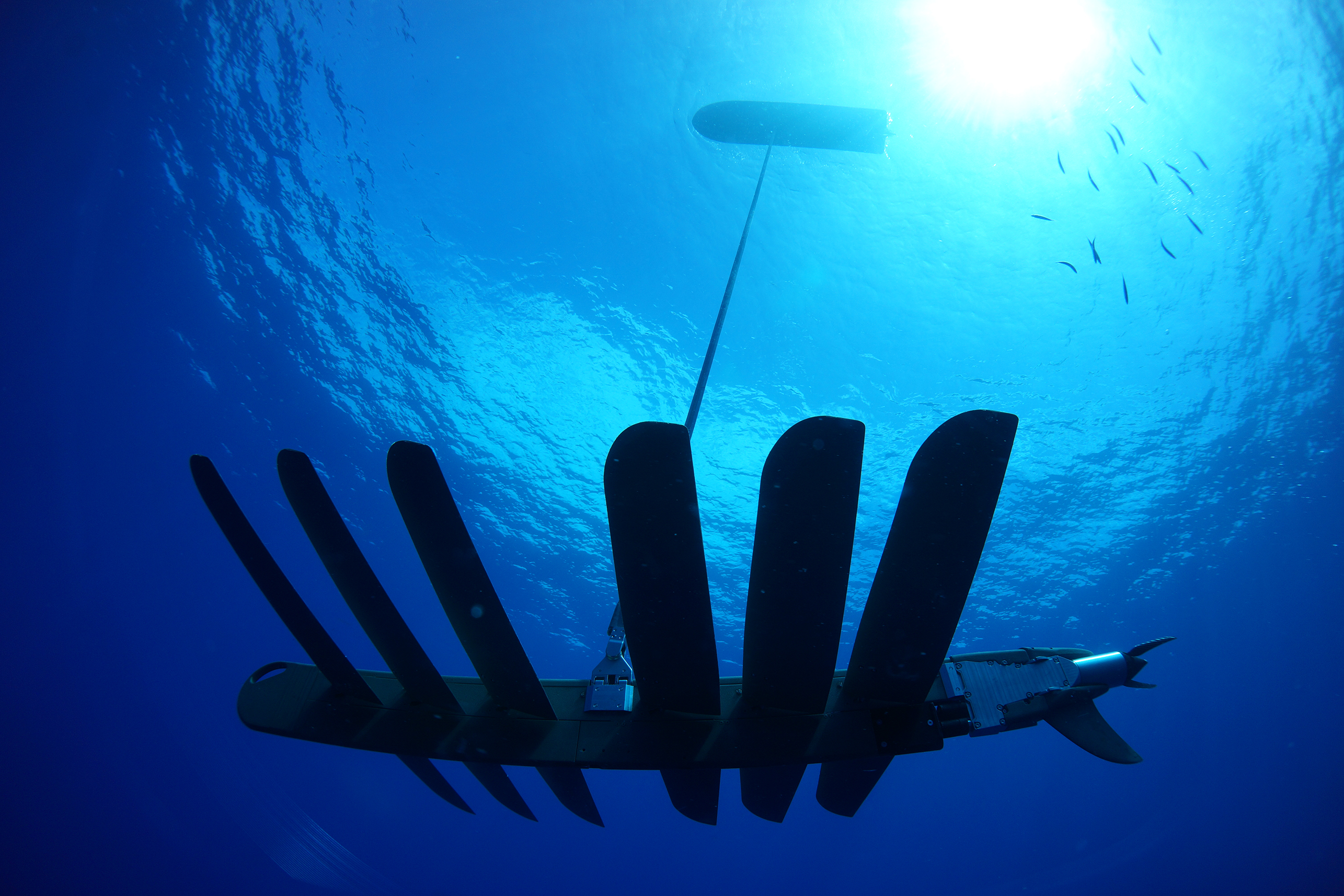
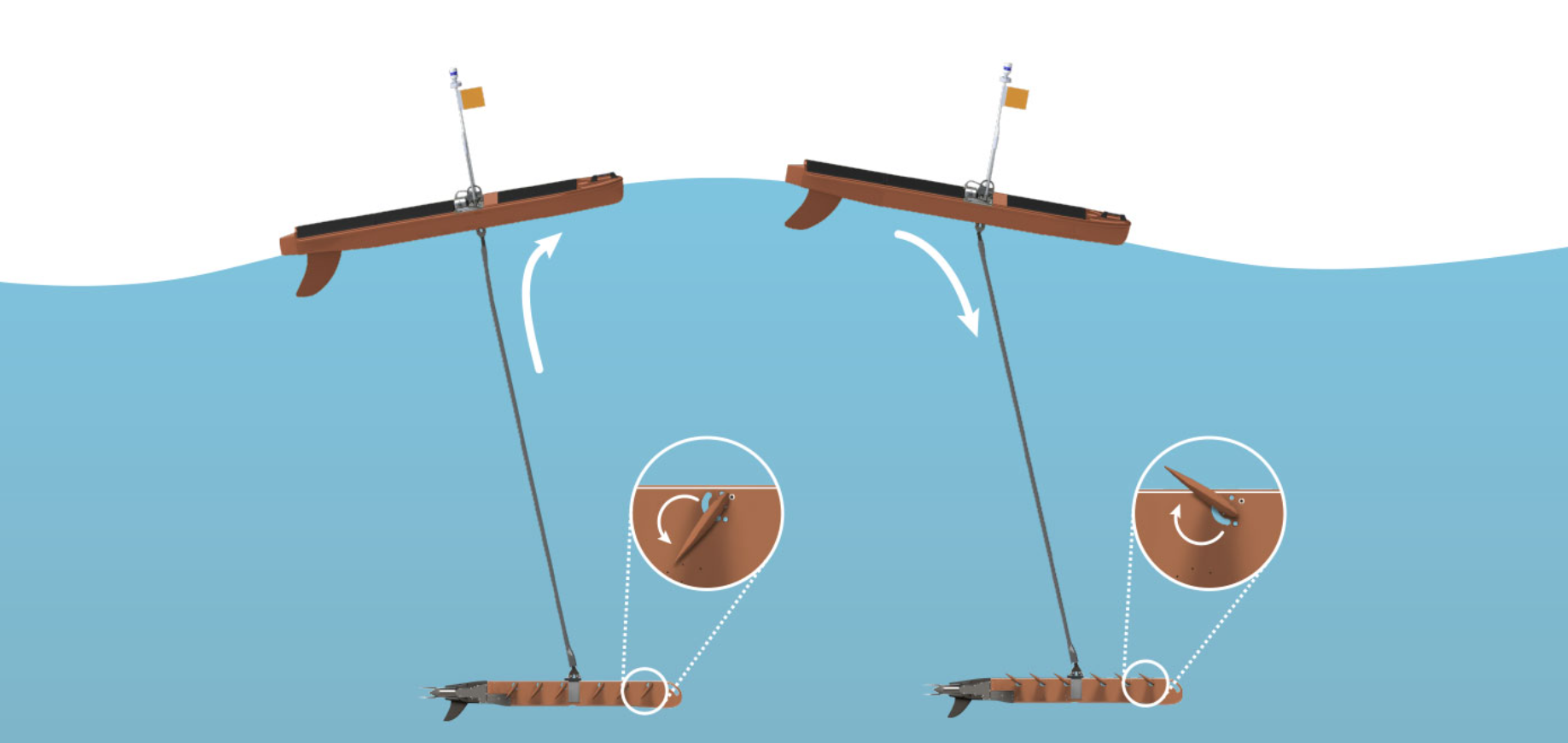
The Wave Glider uses a unique two-part architecture:
- Wave energy is converted into forward propulsion through surface motion differences
- Solar energy powers onboard systems, sensors, and battery storage
This hybrid system enables long-duration, autonomous missions with minimal maintenance requirements.
Operational Capabilities
- 24×7 long-duration autonomous operations (up to 12 months)
- Station-keeping and mobile data collection
- Fleet-based scalable ocean surveillance
- Real-time mission updates and adaptive navigation
- Vessel detection and avoidance
- Subsea sensor deployment support (via winch systems)
Communications and Autonomy
The platform functions as a real-time maritime communications gateway, linking seabed systems, surface platforms, and satellites.
It supports:
- Satellite, cellular, Wi-Fi, and line-of-sight radio communication
- Multi-vehicle fleet coordination
- Remote mission control and dynamic task reconfiguration
- Autonomous navigation with programmable routes and station keeping
Operational Advantages
- Low visibility long-endurance deployment
- Open and extensible sensor integration platform
- Proven reliability with over 3 million nautical miles of operation
- Efficient fleet scaling for wide-area coverage
- Reduced operational risk and cost
- Safer operations by removing personnel from hazardous environments
| Category | Specification |
|---|---|
| Platform Type | Autonomous uncrewed surface vehicle (USV) |
| Propulsion | Wave energy (primary), solar-assisted thrust |
| Endurance | Up to 1 year (depending on conditions) |
| Water Speed | 0.8 – 2.0 kt (SV3 / SV5 dependent) |
| Minimum Water Depth | > 15 m |
| Station Keeping | 50 m radius (SV3), 100 m (SV5) |
| Solar Power | Up to 225 W (SV3), 525 W (SV5) |
| Battery Capacity | 6.8 kWh (SV3), 15.7 kWh (SV5) |
| Payload Capacity | Up to 215 kg (SV5) |
| Communications | Satellite, cellular, Wi-Fi, line-of-sight radio |
| Payload Integration | Mast, float, sub, or winch-mounted systems |
| Sensor Deployment | Winch-based subsea sensor support |
| Navigation | Autonomous + programmable mission control |
| Fleet Operation | Multi-vehicle coordinated deployment |
| Software Systems | Regulus (autonomy), WGMS (mission control) |