Ambush Drones Explained: How FPV Drones Are Becoming Flying Landmines
Not every drone threat buzzes overhead. Some are now sitting on the ground, concealed in vegetation. Or perched on rooftops, waiting for their next target.
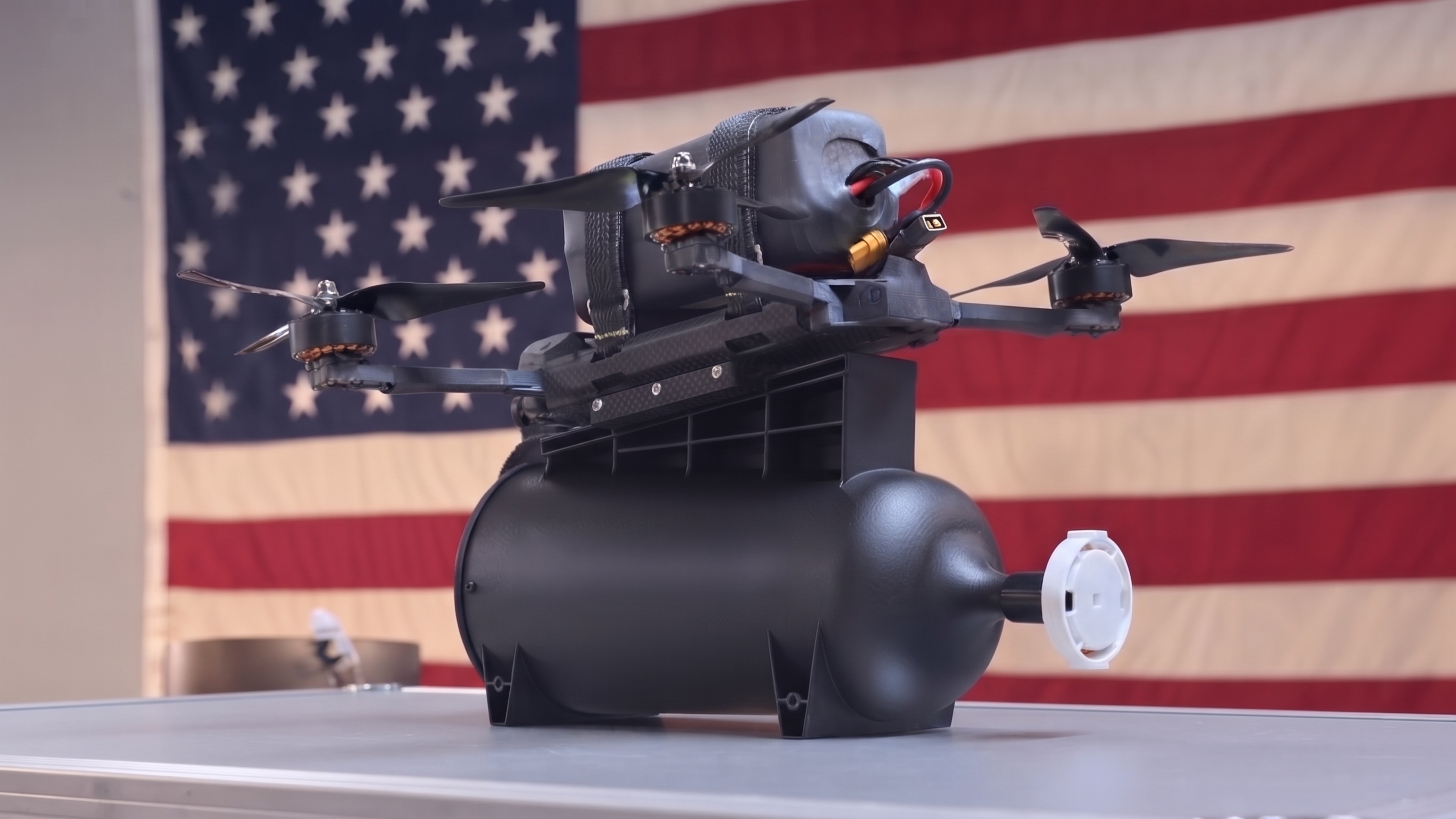
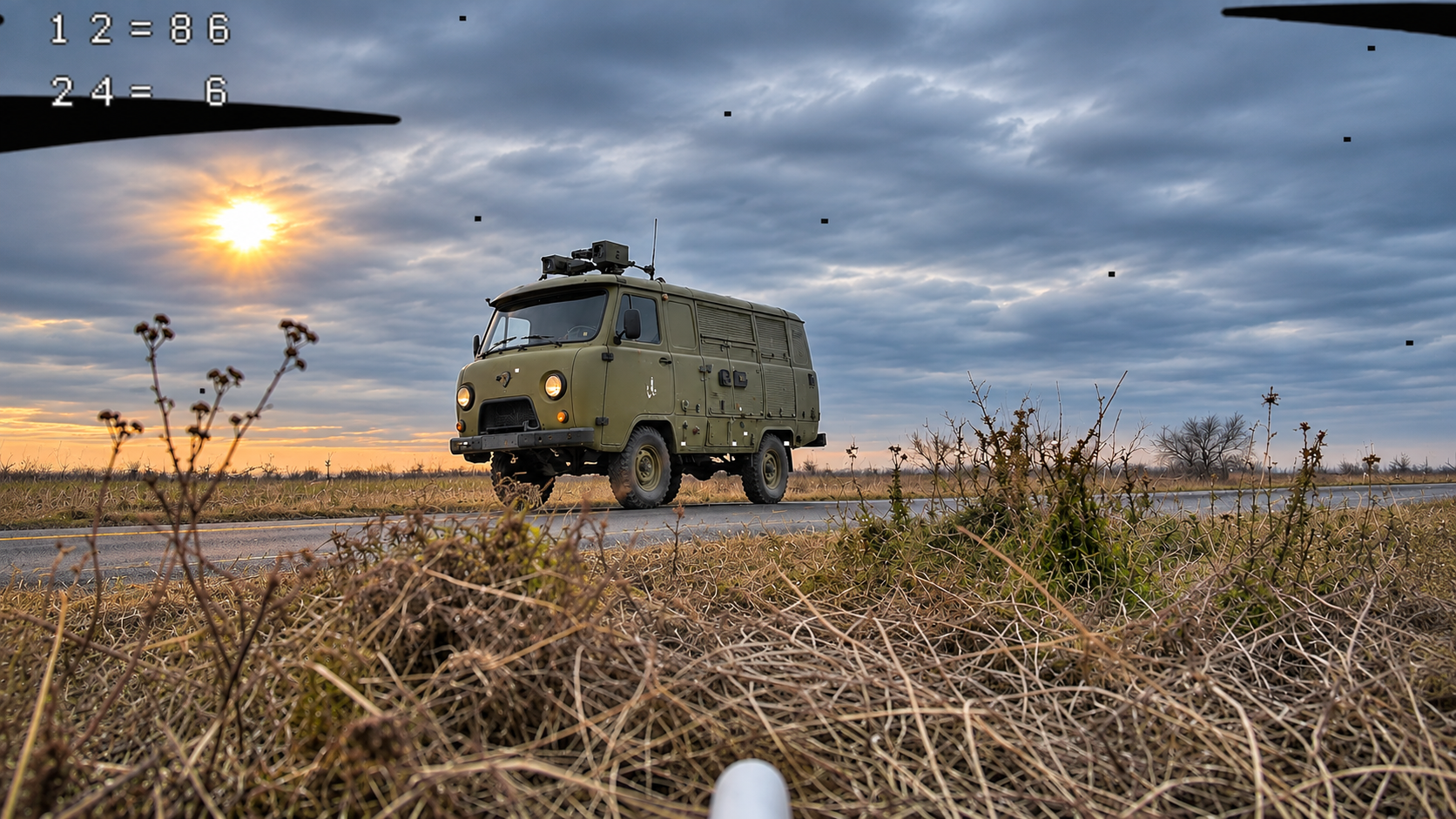
In Ukraine, both sides have ramped up their use of ambush drones — modified FPVs that land, lie in wait, and take off when a target appears. Also called sleeper drones, these little gizmos combine the mobility of UAVs with the delayed-strike capability of landmines. A particularly nasty threat.
So we decided to look deeper into what ambush drones are and why they’re creating a new headache for counter-drone defence.
What Are Ambush Drones?
An ambush drone is a modified FPV drone that can be pre-positioned in an area and remain there until an operator decides to engage a target. Unlike conventional FPV strike drones, which just fly for the target, ambush drones can hover or land to wait, effectively making them a form of loitering munitions.
This feature makes them similar to drone mines, although they’re not the same thing. To be clear:
- Conventional FPVs are actively piloted towards a target, typically during a single continuous flight.
- Ambush or sleeper drones remain stationary between deployment and engagement, sometimes for hours.
- Drone-deployed mines are conventional explosive devices delivered by UAVs, rather than drones that act as weapons themselves.
So unlike a conventional mine, an ambush drone can reposition itself and engage a target miles away from its original landing point.
How Do Ambush Drones Work?
Most ambush drones take advantage of existing FPV hardware, tuned to support stationary operations in four ways.
1. Landing and Standby Capabilities
Instead of hovering continuously, an ambush drone lands and shuts down its propulsion motors. So it can’t be detected with acoustic sensors.
This cuts energy consumption, so it stays operational for longer. However, communication, video transmission, and onboard electronics still consume battery power. So it can’t be on standby indefinitely.
Some platforms can remain on standby overnight, although endurance varies depending on the hardware configs and environmental conditions.
2. Fiber-Optic Communication
Many ambush drones use fiber-optic cables instead of traditional radio links to “stay invisible” for longer.
Equipped with ultra-thin cables that unwind from a spool as the drone flies, fiber-optic drones can maintain control and video links at long distances without being detected or jammed by conventional EW systems. In April 2025, Russian fiber-optic FPVs were already reported to travel for up to 10km/6 miles before landing and waiting for unsuspecting targets.
Fiber-optic drones thus also maintain more reliable communication at low altitudes, where buildings and terrain can obstruct wireless signals.
But there are trade-offs too. Cable spools add weight, reducing available payload capacity and causing faster battery drainage. Physical damage or tangled cables can also interrupt communication.
3. Onboard Cameras and Target Observation
Like conventional FPVs, ambush drones use IR and RGB cameras to provide operators with a live view of their surroundings. So they can decide when to resume flight or attempt an engagement.
To date, most documented ambush drones didn’t have autonomous targeting capabilities. Although this may change in the future, as AI-assisted detection could substantially reduce the monitoring workload.
4. Power Management
Standby operation extends endurance primarily by eliminating the energy demands of continuous propulsion. Extra power-saving electronics and alternative charging methods also extend waiting periods further.
Some of the observed Russian ambush drones were carrying makeshift solar chargers. The FPVs were equipped with $50 solar panels, typically sold as camping supplies. A 5-watt solar charger like this can power the ambush drone for several more hours. And more sophisticated solutions can make these lurking threats even more dangerous, as it would be able to wait for targets for as long as the sun shines, resuming operations the next day at dawn.
Why Ambush Drones Are Harder to Detect and Counter
Most modern-day counter-UAS systems rely on a mix of signal, sound, or movement detection from a drone. Ambush drones complicate all three approaches because of:
- Reduced RF visibility. Fiber-optic-controlled drones don’t emit any radio control-link emissions that RF detectors can capture.
- Minimal acoustic signatures. Ambush drones with inactive motors are almost soundless and harder to pick up with microphones or parabolic collectors.
- Limited visual signatures. Smaller ambush drones can hide in vegetation, debris, behind infrastructure, or parked vehicles. So they’re harder to pick up visually.
- Shorter reaction windows. An ambush drone taking off right next to its target leaves you with just seconds to respond.
To counter ambush drones, defenders will need to add more layers to existing networks, like thermal imaging and advanced optical systems, to maintain more persistent surveillance.
As ambush drones evolve, the advantage will shift to defence networks that can spot lurking threats before they strike. Waiting until takeoff may already be too late.